
Custom Theme Development
Build a Shopify theme around defined brand, storefront, and merchandising requirements instead of adapting the entire experience to the limitations of a generic theme structure.
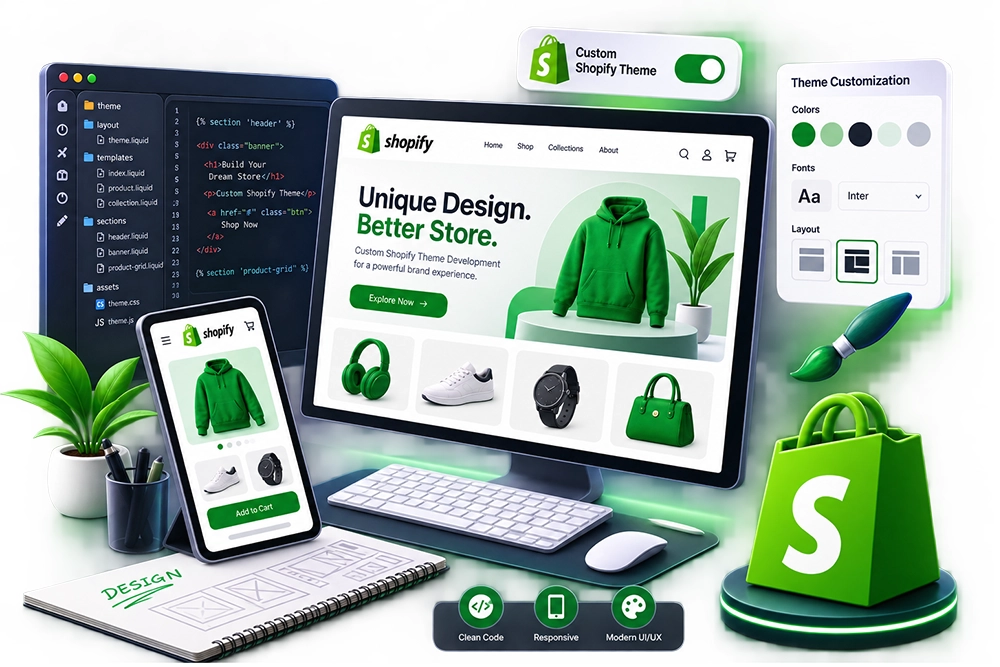
Turn your storefront requirements into a Shopify theme that fits the way your business actually sells. Instead of forcing products, content, and merchandising into rigid layouts, we develop flexible theme components around your brand direction, catalog structure, customer journeys, and day-to-day store management needs.
From custom sections and product templates to Liquid development and responsive storefront behavior, the theme is engineered as a working foundation rather than a collection of visual pages. Whether the project starts from a detailed design or requires a custom Shopify theme from scratch, development stays focused on usability, maintainability, and room for the store to evolve.
Pre-built themes are useful starting points, but their structure can become restrictive when a store needs distinctive product layouts, specialized merchandising, reusable content sections, or interactions that were never part of the original theme. Repeated workarounds can eventually leave the storefront harder to manage while still falling short of the experience the brand needs.
Custom theme development approaches the problem from the store's actual requirements. We translate approved layouts and functional needs into Shopify templates, sections, blocks, snippets, and Liquid logic that work together as a coherent theme. The result gives merchants practical control over content while allowing the storefront to retain its own visual and functional character.
Theme requirements extend well beyond the homepage. We develop the templates, reusable components, storefront logic, and responsive behavior needed to turn a design system into a manageable Shopify shopping experience.
Build a Shopify theme around defined brand, storefront, and merchandising requirements instead of adapting the entire experience to the limitations of a generic theme structure.
Develop and refine Liquid templates, snippets, conditions, objects, and storefront logic needed to present Shopify data within the required customer experience.
Create configurable components that allow store teams to manage important page content through the theme editor without rebuilding layouts whenever information changes.
Develop templates around the way products need to be explained, compared, discovered, and merchandised, with layouts suited to the catalog rather than a single generic format.
Translate the intended storefront experience across mobile, tablet, and desktop layouts while accounting for navigation, content hierarchy, imagery, controls, and shopping behavior.
Structure compatible theme components around Shopify's modern storefront architecture, including reusable sections and configurable templates where they suit the project requirements.
Good theme development is not measured only by how closely the storefront matches a design. The underlying components also need to make sense when products change, campaigns launch, new content is added, and the internal team takes over everyday store management.
Theme architecture is planned around reusable components where appropriate, reducing the need to create a completely separate implementation every time a similar content pattern appears elsewhere in the storefront.
Merchant controls are considered during development so editable content can remain practical for the people managing the store instead of requiring code changes for routine updates.
Product and collection requirements influence template decisions, helping the theme accommodate the information customers need rather than squeezing every catalog type into identical layouts.
Responsive behavior is developed alongside the storefront rather than postponed until the end, allowing important interactions and content priorities to be considered across screen sizes.
Custom functionality is approached with maintainability in mind, avoiding unnecessary complexity when Shopify's native theme capabilities can provide a cleaner solution.
Development follows the agreed design and functional scope while leaving a structured foundation that can accommodate reasonable storefront changes as the business evolves.
Theme development moves from requirements and component planning into implementation, review, and storefront testing. Working in stages keeps visual decisions, reusable components, merchant controls, and technical behavior connected throughout the build.
We examine the approved designs, catalog needs, content requirements, expected interactions, existing store constraints, and required templates before defining how the theme should be structured.
Page patterns are broken into appropriate templates, sections, blocks, snippets, settings, and reusable components so development begins with a clear relationship between design and Shopify's theme structure.
The planned components are implemented with Liquid, HTML, CSS, JavaScript, and relevant Shopify theme capabilities, connecting storefront presentation with the data and settings required by each template.
Components are assembled into the required storefront templates and connected with products, collections, content, navigation, and other agreed elements so the theme operates within the actual store environment.
Key templates, configurable sections, interactions, and responsive layouts are reviewed across relevant screen sizes to identify implementation issues before the theme is prepared for final approval.
After final revisions, the approved theme is prepared for its intended store environment. Important editable areas and configuration requirements can be reviewed so the team understands how to work with the completed storefront.
Custom development involves decisions about design, Liquid, editable sections, existing themes, development scope, and long-term store management. These answers cover several points worth understanding before the build begins.
Yes. A custom theme can be developed around defined designs and storefront requirements rather than starting with the visual structure of an off-the-shelf theme. The exact architecture depends on the required templates, components, features, and merchant controls.
Yes. Liquid development can be used for templates, snippets, storefront logic, dynamic content presentation, and other theme requirements that rely on Shopify's templating system.
Yes. Existing approved designs can be reviewed and translated into Shopify theme components. Before development, we assess how the layouts, interactions, responsive behavior, and editable content should map to Shopify's theme architecture.
Configurable sections and blocks can be developed for suitable content areas so store teams can manage supported content through Shopify's theme editor. The available controls depend on how each component is designed and implemented.
Yes. An existing theme can be assessed before deciding whether its current architecture is suitable for the requested development. Some projects require focused extensions, while others may benefit from a broader theme rebuild.
Cost varies with the number of templates, complexity of the designs, custom sections, storefront interactions, Liquid requirements, responsive behavior, integrations, and overall development scope. Requirements should be reviewed before estimating the project.
Bring us your designs, storefront requirements, or an existing theme that has reached its limits. We can assess the required templates, components, Liquid logic, and merchant controls before turning the specification into a structured Shopify theme.