
Product Page Optimization
Review product information, content hierarchy, imagery, variant presentation, calls to action, supporting details, and trust elements to make the purchase decision easier to understand.
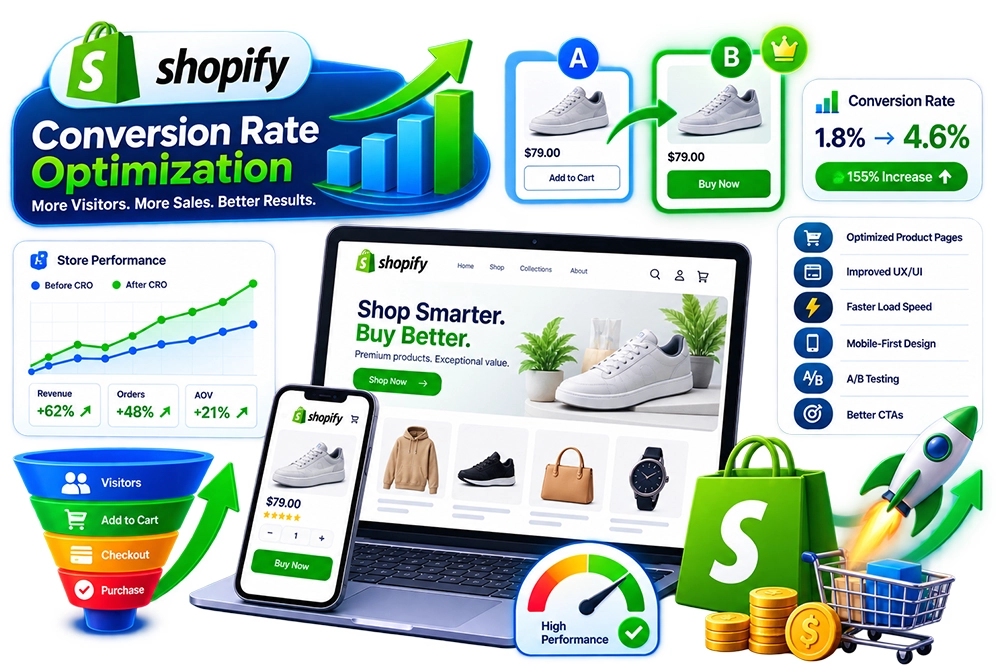
More traffic does not automatically create more sales if shoppers encounter unclear product information, weak calls to action, unnecessary friction, or hesitation during the buying journey. Shopify conversion rate optimization focuses on identifying those barriers and improving the parts of the storefront that influence whether visitors continue, abandon, or purchase.
We review customer journeys across key pages, product presentation, navigation, cart behavior, trust signals, mobile usability, and other conversion-sensitive areas before recommending changes. The goal is to make the path to purchase clearer and easier to complete without relying on aggressive tactics or superficial design changes.
A store can attract qualified visitors and still underperform when customers have to work too hard to understand products, compare options, find reassurance, navigate important pages, or complete the buying process. Small usability and messaging problems can compound across the journey and make abandonment more likely even when the underlying offer is strong.
Conversion optimization examines those moments systematically. We look at customer behavior, page structure, product communication, calls to action, cart flow, trust signals, mobile usability, and other decision points, then prioritize improvements according to where the journey appears unclear, distracting, or unnecessarily difficult.
Conversion performance is influenced by many small interactions rather than one isolated page. We review the journey from initial product discovery through consideration, cart activity, and purchase intent to identify where clearer structure or stronger usability can make a difference.
Review product information, content hierarchy, imagery, variant presentation, calls to action, supporting details, and trust elements to make the purchase decision easier to understand.
Improve the way shoppers move through collections, filters, navigation, and product groupings so relevant items are easier to find without adding unnecessary steps to the browsing process.
Review cart content, editing behavior, pricing clarity, quantity controls, calls to action, and supporting information that may influence whether customers continue toward checkout.
Identify areas where shipping details, returns information, product reassurance, policies, credibility signals, or unclear messaging may leave shoppers with unanswered questions before purchase.
Examine the mobile buying journey for crowded layouts, difficult interactions, hidden information, weak content hierarchy, or other issues that can make purchasing harder on smaller screens.
Prioritize changes that can be evaluated against available behavioral and performance data, helping future decisions rely more on evidence and less on assumptions about what customers prefer.
Conversion work should not be reduced to louder buttons, more pop-ups, or artificial urgency. We focus first on clarity, usability, confidence, and decision friction because sustainable improvements usually begin with making the store easier for real customers to use.
Recommendations are tied to identifiable customer or storefront problems instead of generic CRO checklists applied without considering the actual store experience.
Product communication is reviewed alongside interface design so layout changes do not ignore missing information that may be preventing customers from making confident decisions.
Conversion barriers are considered across the full journey, reducing the risk of optimizing one page while leaving the next step confusing or unnecessarily difficult.
Mobile behavior receives separate attention because layouts and interactions that feel clear on desktop can create very different friction on smaller devices.
Available analytics and behavioral signals are used where useful to support prioritization instead of assuming every visual preference automatically affects purchase behavior.
Changes are evaluated against the wider brand and customer experience so conversion work does not make the storefront feel aggressive, inconsistent, or difficult to trust.
CRO begins with understanding where the buying journey is losing clarity or momentum. We review customer paths, identify likely friction points, prioritize changes, implement agreed improvements, and use available data to evaluate what should be tested or refined next.
We examine important paths from landing and product discovery through product evaluation, cart activity, and purchase intent to understand where customers may encounter unnecessary friction.
Potential issues are grouped across usability, messaging, product information, navigation, trust, mobile behavior, and other factors that can influence whether shoppers continue or abandon.
Recommendations are prioritized according to customer impact, business relevance, implementation complexity, and the strength of the available evidence rather than treating every issue equally.
Approved changes are implemented across relevant product, collection, cart, navigation, content, or interface areas while keeping the broader customer journey consistent.
Updated journeys are reviewed across relevant devices and customer scenarios to confirm that intended improvements do not introduce new usability or presentation problems elsewhere.
Available conversion and behavioral data can be reviewed after implementation to understand how the store is performing and where the next round of testing or optimization may be most useful.
Conversion optimization often raises questions about low conversion rates, product pages, testing, mobile performance, traffic quality, and expected results. These answers cover the practical considerations that should be understood before CRO work begins.
Shopify conversion rate optimization is the process of reviewing and improving parts of the shopping journey that may influence whether visitors complete desired actions, such as adding products to cart or making a purchase.
Low conversion can have many causes, including traffic quality, unclear product information, poor mobile usability, weak trust signals, confusing navigation, pricing or offer issues, cart friction, or problems elsewhere in the purchase journey.
Yes. Product pages can be reviewed for information hierarchy, imagery, calls to action, variant selection, supporting content, trust elements, and other factors that affect how easily customers can evaluate the product.
It can. Difficult navigation, crowded layouts, slow interactions, unclear product details, or awkward cart behavior on smaller screens can create friction that may affect whether customers continue through the buying journey.
No specific conversion increase should be guaranteed. Results depend on traffic quality, products, pricing, demand, customer intent, storefront issues, competition, seasonality, and the changes being tested or implemented.
Cost depends on the number of pages and journeys being reviewed, available analytics data, design or development changes required, testing scope, mobile issues, and the depth of ongoing optimization involved.
Share your Shopify store and the areas where customers seem to drop off or hesitate. We can review the buying journey, identify likely conversion barriers, and prioritize practical changes across product pages, navigation, cart experience, trust signals, and mobile usability.