Collection & Category Architecture
Organize products around categories, styles, occasions, seasons, new arrivals, best sellers, and other relevant shopping paths so customers can explore even a growing catalog without feeling lost.

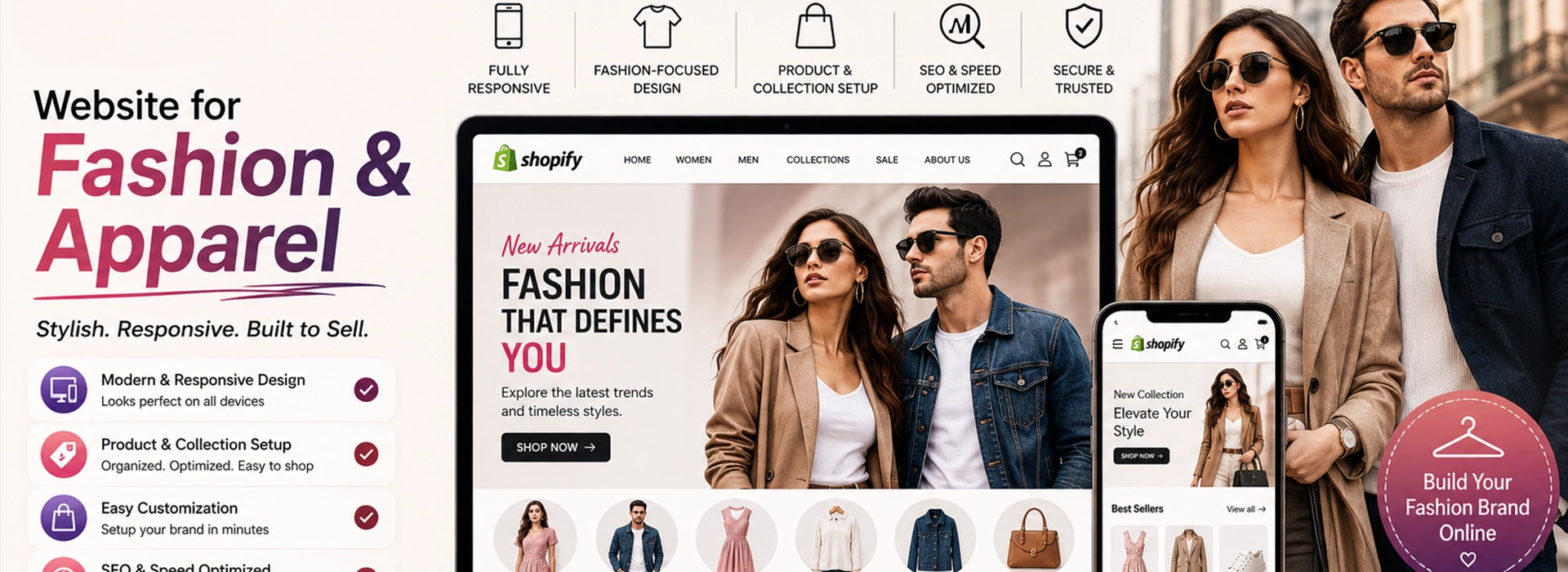
A growing apparel catalog can become difficult to shop when collections overlap, filters lack clarity, size information is hard to find, or new arrivals disappear inside crowded navigation. Even strong products can lose attention when customers have to work too hard to find the right style.
These points of friction become more noticeable as product ranges, campaigns, seasonal launches, and customer traffic increase. Shoppers may leave simply because a preferred variant is unclear, the mobile journey feels cumbersome, or they cannot confidently understand fit and availability.
We shape Shopify fashion stores around real shopping behavior. Clear collections, thoughtful product presentation, useful filtering, intuitive variant selection, responsive layouts, and conversion-focused journeys work together to create an experience that supports both your customers and your brand.
Fashion storefronts need more than attractive visuals. We focus on the practical ecommerce capabilities that help customers discover products, understand their choices, and move confidently toward purchase.
Organize products around categories, styles, occasions, seasons, new arrivals, best sellers, and other relevant shopping paths so customers can explore even a growing catalog without feeling lost.
Present sizes, colors, styles, availability, and other product options clearly so shoppers can understand available choices without adding unnecessary complexity to the product page.
Bring together product imagery, descriptions, sizing guidance, materials, care information, related products, delivery details, and purchase actions in a structured product experience.
Give collections, featured products, campaign edits, new arrivals, and seasonal ranges the visibility they need while maintaining a clear and consistent storefront experience.
Create responsive journeys for customers browsing collections, viewing imagery, applying filters, choosing variants, adding products to cart, and purchasing from smartphones and tablets.
Prepare flexible storefront areas for new collections, limited releases, collaborations, festive campaigns, promotions, and other time-sensitive fashion launches.
Fashion changes quickly. Your ecommerce setup should support new products, collections, campaigns, and merchandising decisions without forcing you to rethink the entire storefront whenever the business evolves.
Create a storefront where imagery, typography, layouts, collections, and product presentation reinforce your fashion brand rather than making it feel like another template-based store.
Make it easier for shoppers to move between collections, narrow their choices, discover relevant styles, and reach products that match what they are looking for.
Support expanding ranges, multiple product variants, new categories, seasonal edits, and changing merchandising priorities as your apparel business develops.
Give product drops, promotions, collaborations, and seasonal launches dedicated space through adaptable collections, landing pages, and promotional sections.
Reduce unnecessary friction around sizing, product selection, variant choices, cart actions, and other important stages of the fashion buying journey.
Establish a Shopify foundation capable of supporting larger catalogs, additional markets, integrations, operational changes, and more advanced ecommerce requirements over time.
There is no universal storefront formula for every apparel business. We begin with your brand, catalog, audience, and shopping journey, then shape the Shopify experience around the areas that matter most to your customers.
We examine your product range, collections, variants, target customers, visual direction, merchandising priorities, and existing ecommerce challenges.
Navigation, collections, filters, search, product pages, promotional areas, and purchase paths are planned around how customers are expected to browse.
Layouts and visual systems are developed to give products and imagery prominence while keeping important information and shopping actions accessible.
Approved experiences are configured and developed within Shopify with the required templates, sections, product structures, and relevant integrations.
Important journeys are reviewed across screen sizes with attention to collection browsing, imagery, filters, variant selection, cart interactions, and usability.
After launch, the storefront can continue evolving through optimization, campaign requirements, collection changes, technical improvements, and ongoing Shopify support.
Different fashion categories create different shopping expectations. We adapt storefront structure and ecommerce experiences around the products, positioning, and customers of the individual brand.
Structured experiences for apparel brands managing broad collections, changing ranges, multiple variants, and seasonal merchandising.
Storefront experiences designed around new releases, limited collections, collaborations, product launches, and campaign-led merchandising.
Product journeys that can communicate fit, materials, features, intended use, variants, and related products clearly.
Organized product discovery for stores handling sizes, colors, styles, complementary products, and expanding accessory collections.
Refined storefront presentation focused on strong visual storytelling, product detail, brand consistency, and a considered shopping experience.
Flexible Shopify foundations for growing direct-to-consumer businesses that need room for new collections, campaigns, channels, and markets.
Yes. Shopify can support fashion businesses ranging from focused D2C collections to larger apparel catalogs with multiple products, variants, collections, campaigns, and markets.
Yes. Product structures can accommodate relevant options such as size, color, style, and other variants while keeping selection understandable and convenient for shoppers.
Yes. Existing stores can be improved across navigation, collections, product presentation, mobile usability, merchandising, performance, and important conversion journeys.
Yes. The storefront can include reusable sections, collection templates, landing pages, and merchandising areas for seasonal edits, new releases, collaborations, and promotional campaigns.
Yes. Depending on the catalog, discovery can be improved through better product organization, collections, navigation, storefront search, filtering, and related-product journeys.
Yes. StoreMintX can support ongoing requirements including storefront changes, optimization, maintenance, troubleshooting, campaign updates, and continued Shopify development.