
Custom Theme Sections
Add or refine configurable sections for homepage content, promotions, product storytelling, featured collections, trust elements, and other storefront needs that are not well served by the theme's existing components.
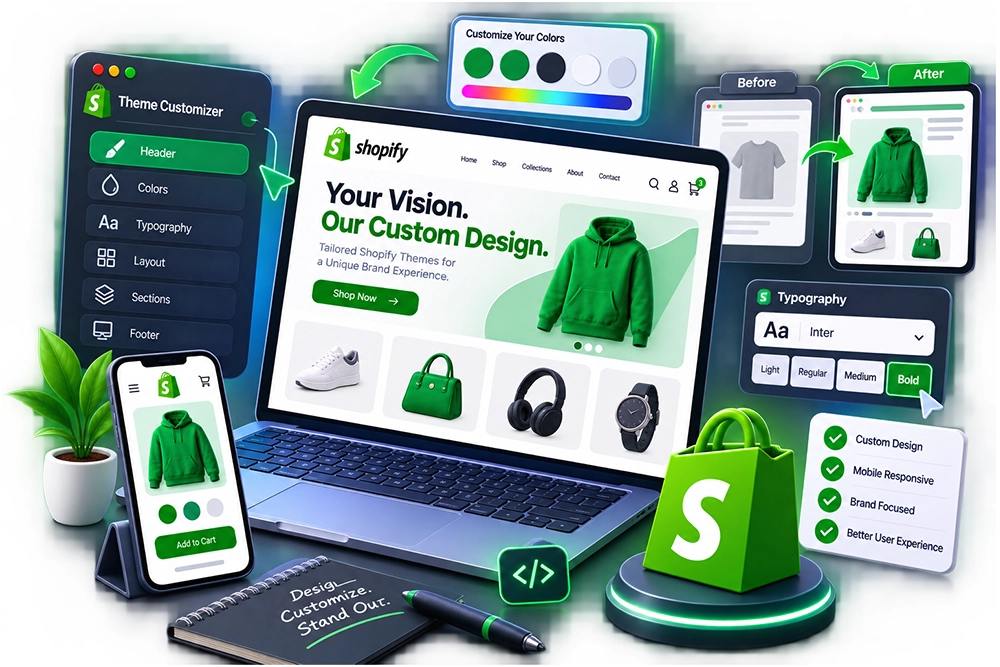
Your existing Shopify theme may already provide a solid foundation, but standard layouts and settings do not always match the way your products, content, or customer journeys need to work. We customize theme sections, templates, styling, Liquid logic, and storefront interactions to close those gaps without rebuilding the entire store from scratch.
Whether you need a stronger product page, a more flexible homepage, custom collection layouts, cart refinements, or theme-level code changes, the work is scoped around the theme you already use. The goal is to make the storefront feel more intentional while preserving the parts of the current setup that still serve the business well.
Many Shopify themes cover the essentials well, yet real stores often need more flexibility than their default settings allow. A product page may need a different information hierarchy, a homepage section may not support the right content, or a collection layout may feel too restrictive for the way customers browse. Small limitations can accumulate until the storefront starts working around the theme instead of the theme working around the store.
Customization lets us improve those specific areas without replacing everything that already works. We assess the existing theme, identify where configuration is enough and where code-level changes are justified, then refine sections, templates, styling, Liquid logic, and storefront behavior around the requirements that matter to your business.
Instead of treating every change as a complete theme rebuild, we focus on the areas where your current storefront needs more control, stronger presentation, or functionality beyond the options already available in the theme editor.
Add or refine configurable sections for homepage content, promotions, product storytelling, featured collections, trust elements, and other storefront needs that are not well served by the theme's existing components.
Rework product templates around the information customers need, including content hierarchy, product details, media, supporting sections, variant presentation, and relevant calls to action.
Create or adapt page and collection templates for use cases that require a different structure from the theme's standard layout, giving specific content or catalog areas their own presentation.
Modify Liquid templates, conditions, snippets, and theme logic when the required storefront behavior cannot be achieved through standard theme settings alone.
Adjust cart presentation, navigation patterns, content placement, calls to action, and other important storefront interactions where the current theme creates unnecessary friction or limits the intended customer experience.
Refine layouts, spacing, imagery, navigation, controls, and content priorities across mobile, tablet, and desktop when the default responsive behavior does not fit the store's real content and merchandising requirements.
Theme customization is most useful when it solves clearly defined storefront problems. We distinguish between changes that can be handled through existing theme controls and those that genuinely require template, Liquid, styling, or interaction-level work.
Existing theme capabilities are reviewed first so custom code is not introduced for something the theme can already handle cleanly through its built-in settings.
Customization stays tied to practical storefront requirements, helping avoid scattered visual tweaks that add complexity without improving how customers or store managers use the website.
Product, collection, and content requirements influence the changes we make, giving templates enough flexibility to support how the actual catalog needs to be presented.
Merchant-editable controls are retained or introduced where appropriate so routine content updates do not unnecessarily depend on repeated code changes.
Mobile behavior is considered during customization because a desktop improvement should not create a new usability problem on smaller screens.
Changes are made within the context of the existing theme structure, reducing the risk of disconnected modifications that become difficult to understand or maintain later.
Every customization starts with the current theme rather than a blank canvas. We identify the limitation, determine the smallest sensible change that addresses it, implement within the existing structure, and then review the result in the actual storefront context.
We examine the active theme, requested changes, relevant templates, existing settings, storefront behavior, and any prior customizations that could influence the new work.
Each requirement is mapped to the most appropriate approach, whether that means using existing theme controls, extending a section, creating a template, modifying Liquid, or adjusting storefront styling and behavior.
Approved changes are implemented within the relevant sections, templates, snippets, styles, scripts, or settings while keeping the wider theme structure in view.
Customized components are connected with the actual products, collections, navigation, content, or page context they are intended to support rather than being assessed only in isolation.
Updated areas are reviewed across relevant screen sizes and interactions to identify visual, content, and functionality issues introduced by or exposed during the customization work.
Once the requested changes have been reviewed and approved, the customized theme is prepared for its intended store environment with any relevant configuration details documented or explained as needed.
Theme changes can range from a small template adjustment to deeper Liquid and storefront work. These answers explain where customization fits, what can usually be changed, and when a broader development project may be the better option.
Depending on the theme and requirements, customization can include sections, templates, product and collection layouts, navigation, styling, Liquid logic, cart presentation, content components, responsive behavior, and other storefront elements.
Yes. Product page customization can involve content hierarchy, additional sections, product information, media presentation, template settings, supporting content, and other elements relevant to how customers evaluate the product.
Yes. Liquid can be modified or extended when a required theme behavior cannot be achieved cleanly through existing settings. The implementation depends on the theme structure, Shopify data involved, and the specific storefront requirement.
Yes. Custom page, product, or collection templates can be created when certain content or catalog areas need a layout that differs from the store's standard template structure.
Dawn can be customized depending on the requested changes and the current version or modifications already present in the store. The theme should be reviewed before deciding how each requirement is best implemented.
Customization is often suitable when the existing theme remains a good foundation and only specific areas need to change. A broader theme development project may be more appropriate when the required storefront structure differs substantially from what the current theme was built to support.
Show us the theme you are using and the changes you want to make. We can review the existing setup, identify where configuration is enough, and plan the right customization for sections, templates, product pages, Liquid logic, or other storefront requirements.