
Shopify Product Setup
Configure products using the supplied catalog information, including titles, descriptions, pricing, media, relevant attributes, and other required product details within a consistent store structure.
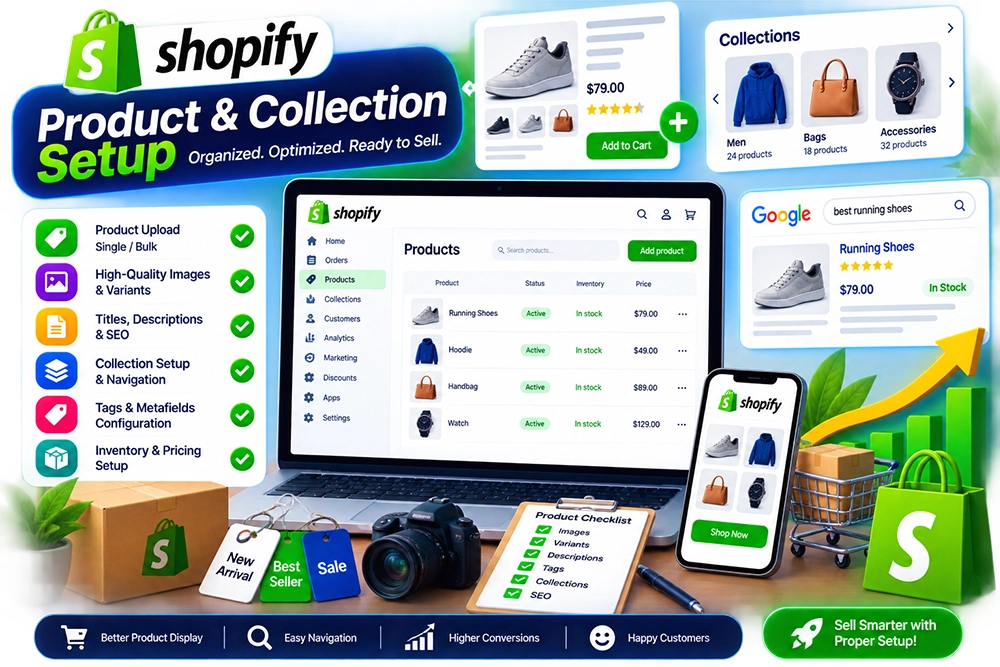
A growing product catalog can quickly become difficult to manage when titles, variants, product information, collections, and merchandising rules are added without a consistent structure. Those small inconsistencies eventually affect more than administration—they can make products harder to browse and leave customers navigating a storefront that does not reflect how they naturally shop.
We bring order to the catalog before that complexity becomes part of the customer experience. Products are configured around clear data standards, collections are organized with purpose, and related catalog elements are reviewed together so your Shopify store has a cleaner foundation for browsing, merchandising, and future expansion.
Adding products one at a time may seem straightforward until the catalog begins to expand. Inconsistent product information, unclear variants, overlapping collections, missing attributes, and loosely planned grouping can gradually make both store management and product discovery more complicated than they need to be.
A deliberate catalog structure solves the problem at its foundation. We organize products, variants, collection logic, supporting information, and merchandising relationships around the way the store needs to operate, giving customers clearer paths to relevant products while keeping the catalog easier to maintain as new inventory is introduced.
Catalog setup involves more than entering product names and prices. We structure the information, variants, collections, media, and merchandising details that shape how products are managed internally and discovered throughout the storefront.
Configure products using the supplied catalog information, including titles, descriptions, pricing, media, relevant attributes, and other required product details within a consistent store structure.
Organize applicable product options and variants so choices such as size, color, material, or other product-specific attributes are represented clearly and consistently within the catalog.
Create and organize collections around product relationships, categories, campaigns, customer browsing needs, or other relevant merchandising logic instead of allowing the catalog to become an unstructured list.
Arrange supplied product images and other available media in a consistent order so product pages present the most useful visual information without unnecessary variation from one listing to another.
Structure product relationships and collection placement with storefront browsing in mind, helping important ranges, categories, and related inventory appear within more intentional shopping paths.
Review an established Shopify catalog for inconsistent product structure, unnecessary collection overlap, incomplete organization, or other setup issues that can make ongoing catalog management harder.
The value of good catalog work becomes more visible as inventory grows. Instead of treating every listing as an isolated entry, we consider how product information, variants, collections, and merchandising decisions will work together once customers and store teams begin using them.
Product information follows an agreed structure so similar items are not configured differently simply because they were added at different stages of the project.
Variants are organized around genuine product choices, keeping the catalog understandable instead of creating unnecessary complexity within individual listings.
Collections are planned around useful product relationships and browsing paths rather than creating categories without considering where they fit into the wider storefront.
Catalog decisions are considered alongside navigation and merchandising so internal product organization can support the way customers encounter and explore the inventory.
Existing inconsistencies are identified before additional catalog work expands them across more products, variants, or collections.
The resulting structure is designed with future catalog additions in mind, making it easier to introduce new products without rebuilding the organizational logic each time.
Before products are entered or reorganized, we review the catalog and decide how its information should be structured. That plan guides product configuration, variants, collections, media, merchandising, and the final quality review so the setup remains consistent from the first listing to the last.
We examine the supplied product data, inventory structure, categories, variants, media, existing catalog where applicable, and storefront requirements before deciding how the information should be organized.
A consistent approach is established for product information, options, variants, collection relationships, and other relevant catalog fields before large-scale setup work begins.
Products are added or refined according to the agreed structure, using the available titles, descriptions, pricing, media, attributes, options, and other supplied catalog information.
Relevant collections are configured and products are grouped according to the planned merchandising and browsing structure, keeping relationships between categories clear.
Product and collection presentation is reviewed from the storefront perspective to identify obvious inconsistencies in organization, product relationships, media, or customer-facing catalog structure.
The completed setup is checked against the agreed catalog structure so missing information, inconsistent configurations, and organizational issues can be addressed before handover.
Product setup can vary significantly between stores depending on catalog size, variant complexity, available product data, and collection requirements. These answers cover the practical questions that usually need to be resolved before catalog work begins.
Yes. Products can be added to an existing store using the information and media you provide, while following an agreed structure for the relevant product fields, variants, and collection relationships.
Yes. Where products have applicable choices, variants can be structured around relevant options such as size, color, material, or other attributes supported by the product configuration.
Yes. Collections can be created around appropriate product categories, ranges, merchandising requirements, or customer browsing needs, depending on how your catalog should be organized.
Yes. An existing catalog can be reviewed for structural inconsistencies, collection organization, variant setup, and other configuration issues before the agreed cleanup work is carried out.
Requirements depend on the catalog, but commonly include product names, descriptions, pricing, images, options or variants, categories, and other relevant product information that needs to appear or function within the store.
Pricing depends on the number of products, catalog condition, variant complexity, collection requirements, available source data, media organization, and whether the work involves a new setup or restructuring an existing catalog.
Share your product catalog, variants, collections, and current store structure with us. We can plan a cleaner setup that makes inventory easier to organize and gives customers clearer ways to explore your products.